
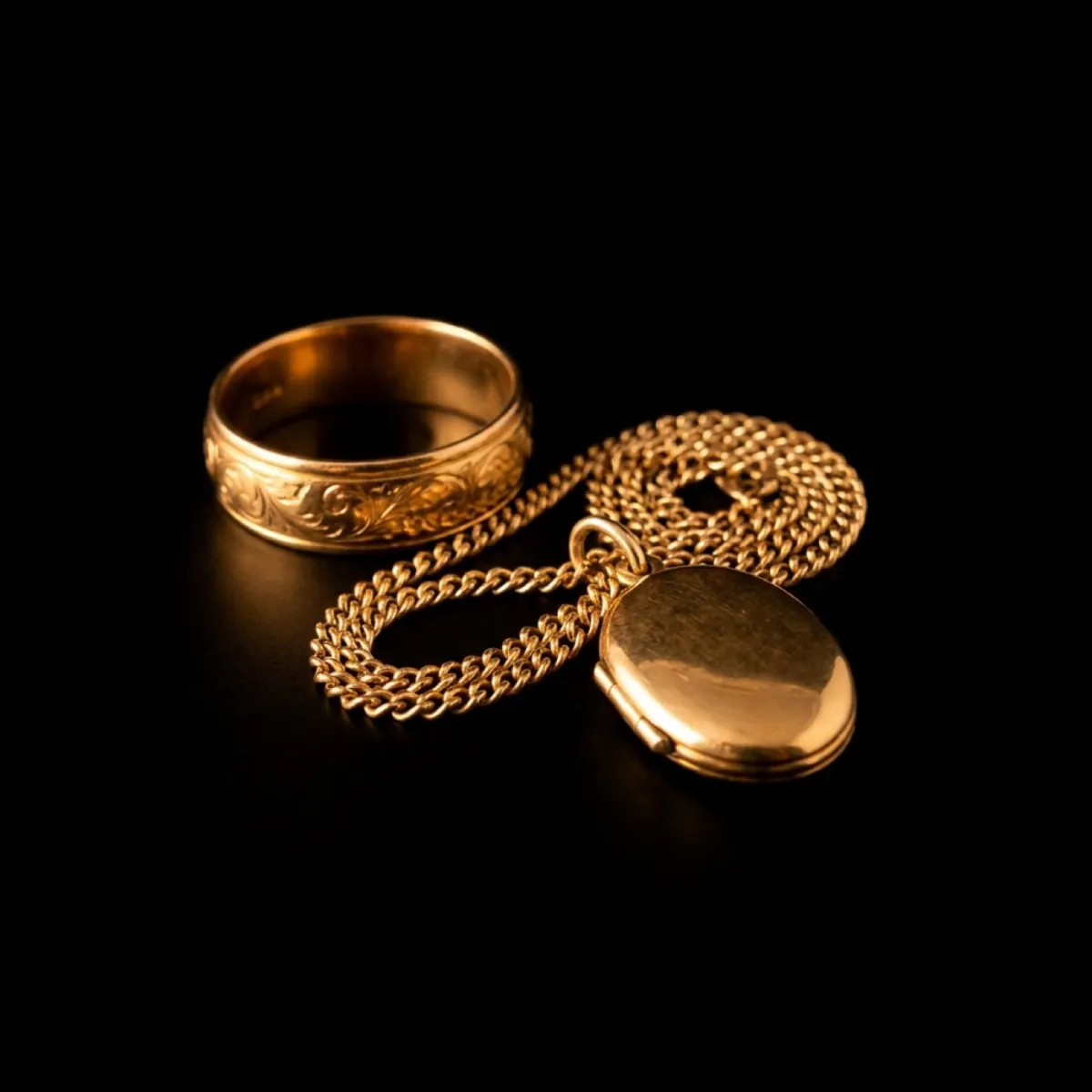
Jewellery identifier & hallmark scanner
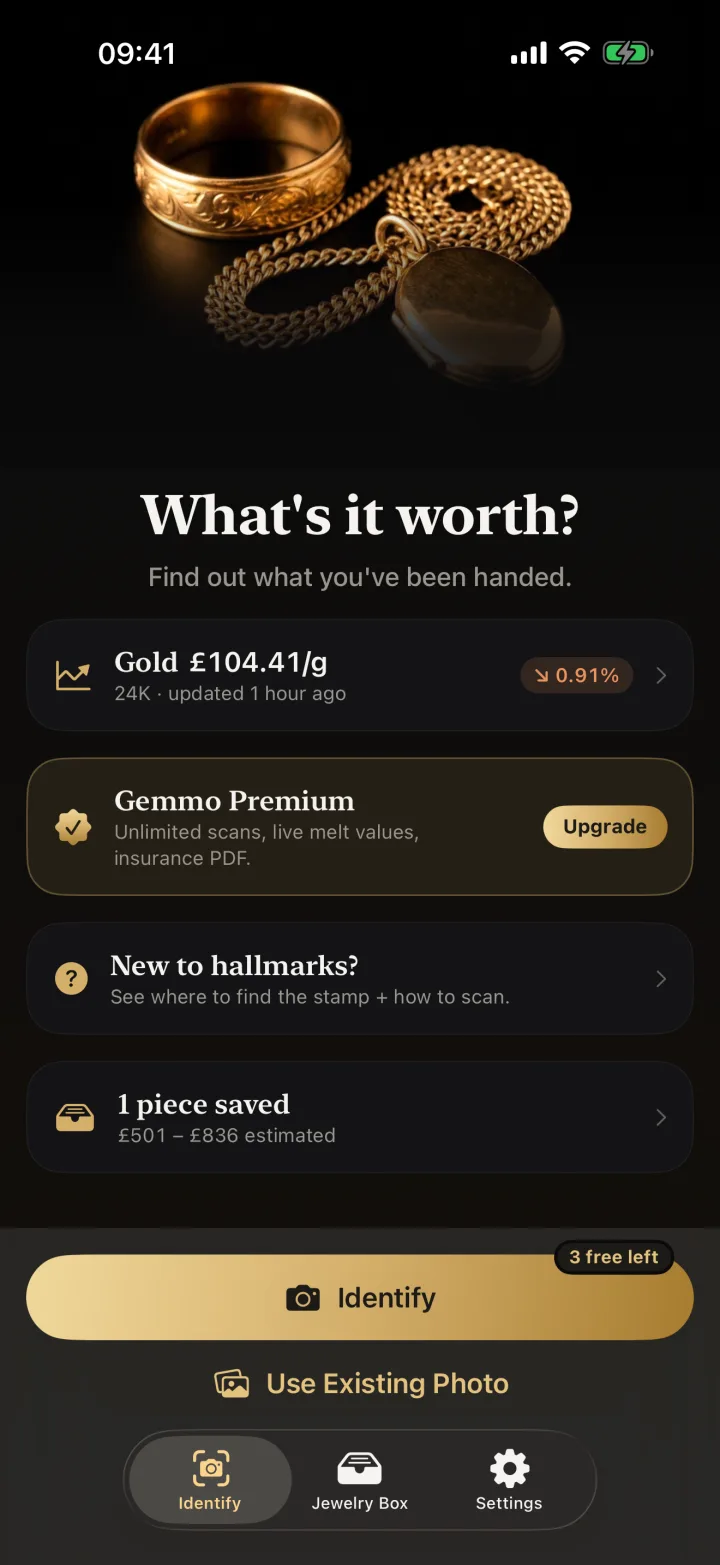
What's it worth?
Photograph a ring, a chain, a locket. Gemmo reads the hallmark, works out the purity, and prices the metal against today's spot market.
- Free to download
- Three scans free
- No account, no tracking
- iOS 17 and later
How it works
Three taps, one number
Photograph the piece
A ring, a bracelet, a locket — one shot of the whole thing. You don't have to hunt for the stamp first.
Gemmo reads the mark
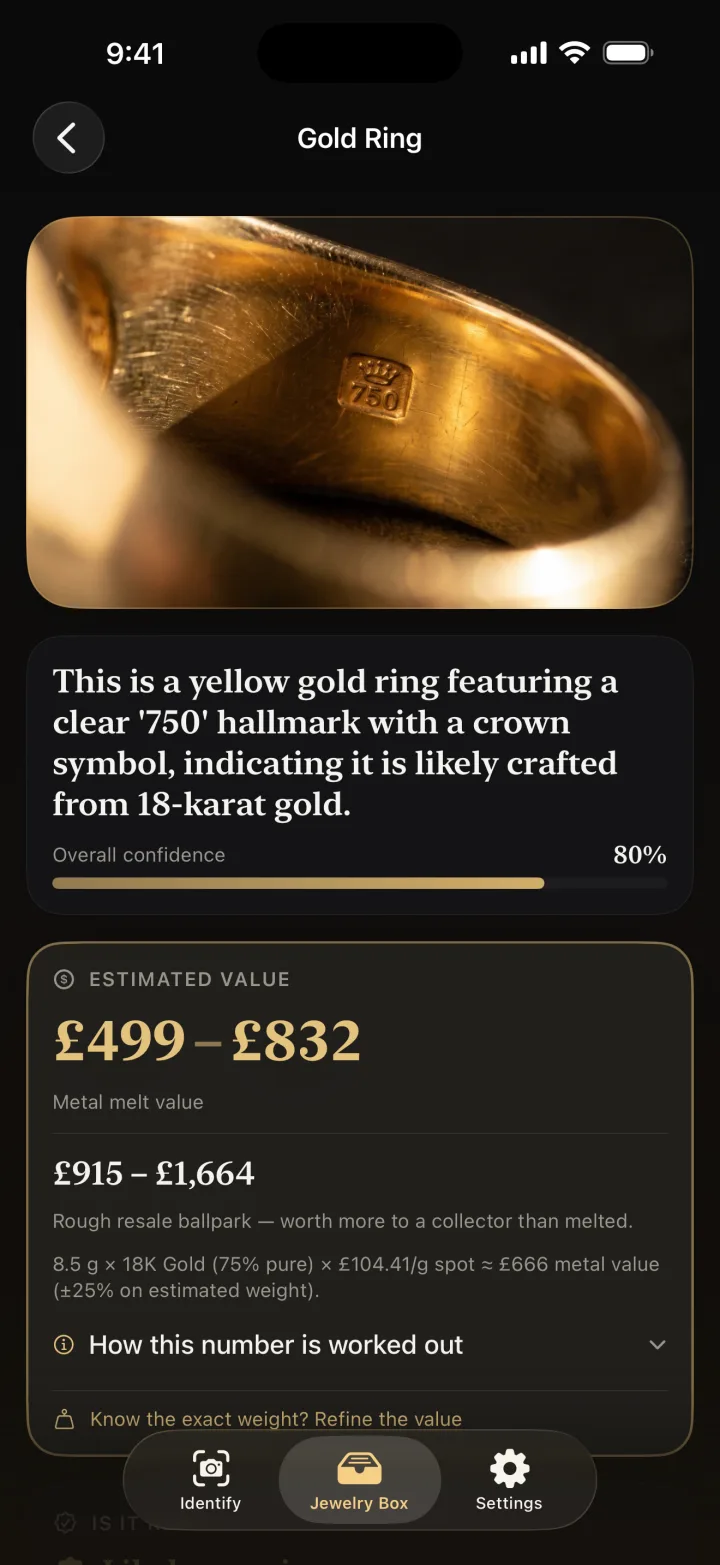
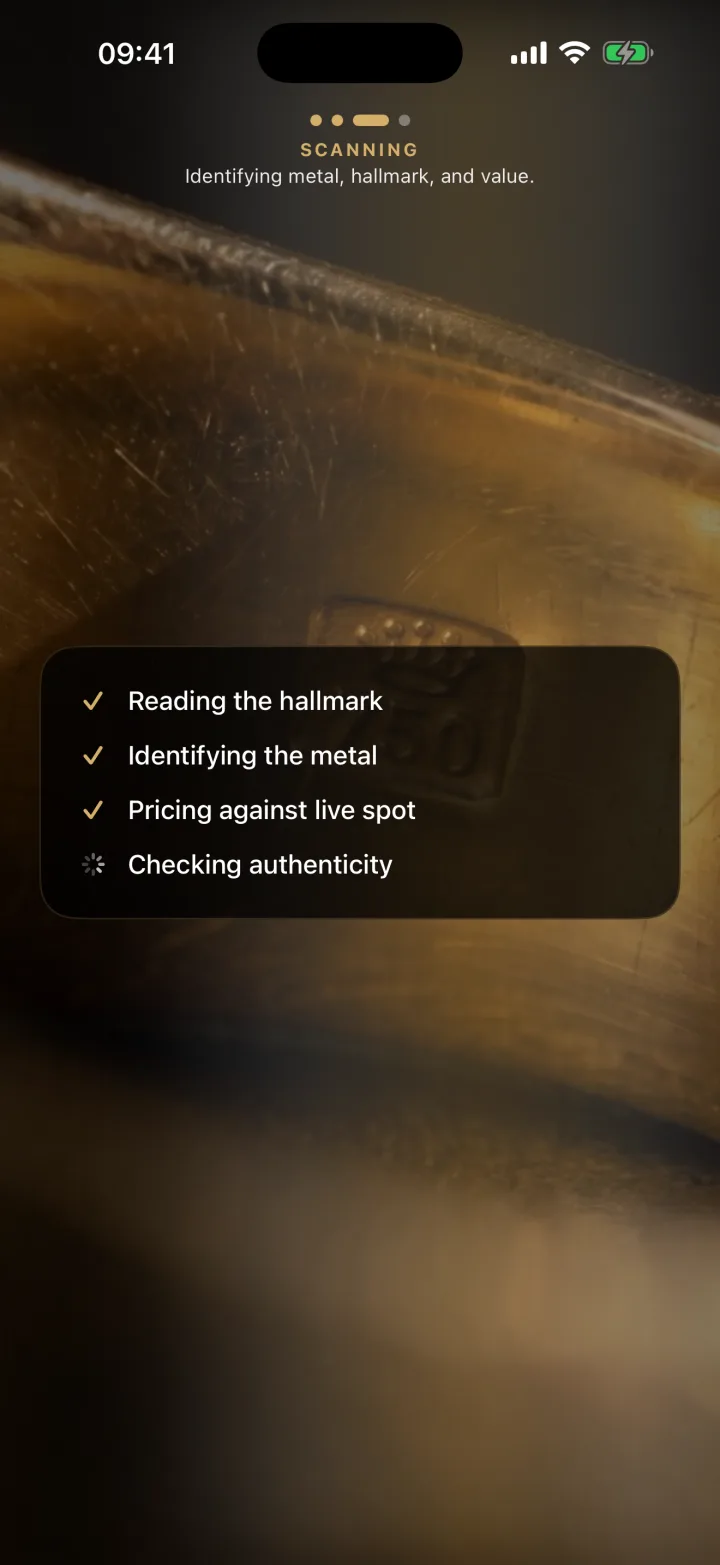
It finds the hallmark, decodes the purity — 585, 750, 925 — and tells you what those numbers actually mean.
Priced against today's spot
Melt value is worked out from live gold, silver and platinum prices in your own currency. Not last month's, not a guess.
The number
Purity × weight × today's spot
Melt value is the one thing about a piece of jewellery that can be calculated rather than judged, which is why Gemmo leads with it. The purity comes off the hallmark. The price comes off the market, in your own currency, and it moves during the day.
The weight is the uncertain part — a photograph can only estimate it — so the answer comes back as a range of roughly ±25%, not a single confident number. Put the piece on a kitchen scale and type in the grams and it tightens to about ±5%, which is just spot and scale noise. Either way the working is on screen: tap the figure and Gemmo shows how it got there.
The mark
Every real piece carries a hallmark
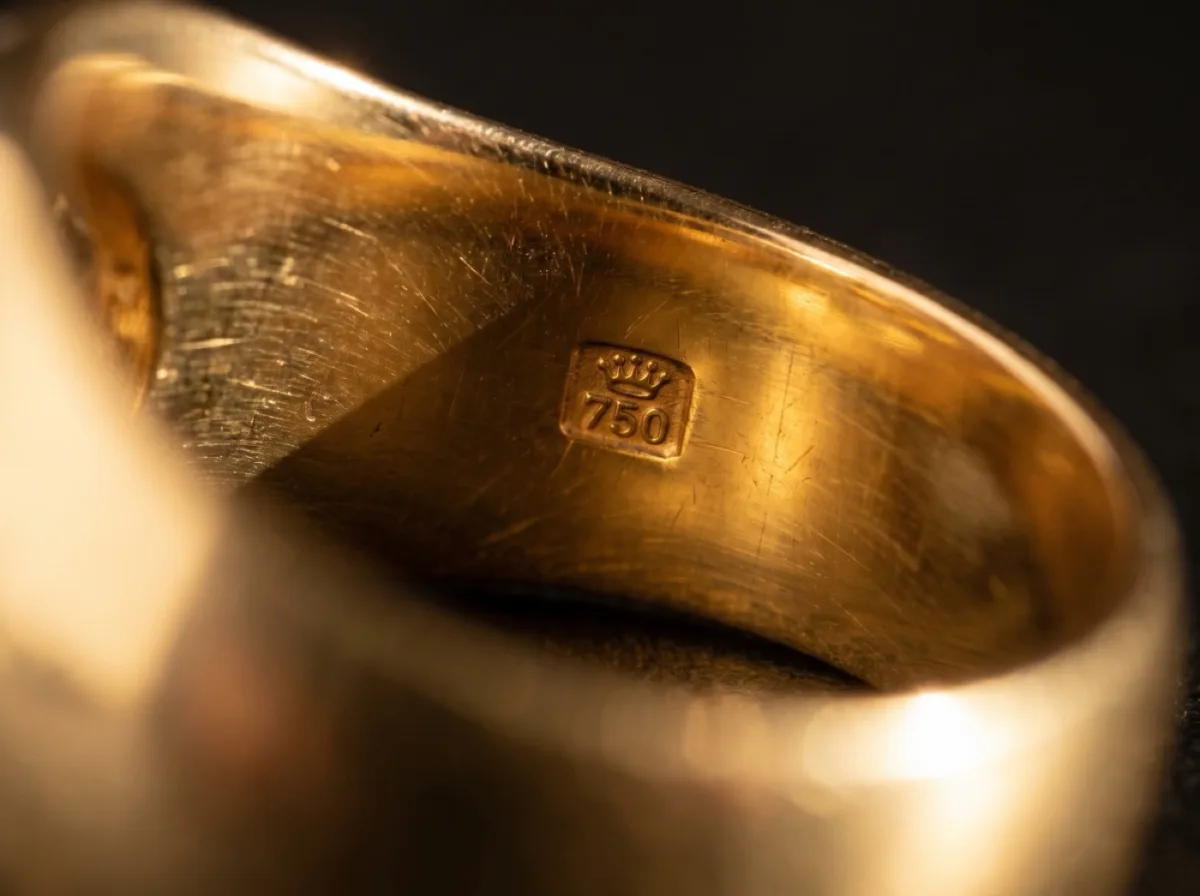
Precious metal is stamped with its purity — inside a ring band, on a clasp, on the back of a pendant. It is the one piece of hard evidence a piece of jewellery carries about itself, and most people have never looked for it.
Gemmo knows where to look and what the numbers mean. A macro scanner mode is tuned for the stamp inside a ring band or on a clasp — and when it still can't read one, it says so rather than inventing a number, and you can type the mark in yourself.
What the numbers mean
| Mark | What it is | Purity |
|---|---|---|
| 375 | 9 carat gold | 37.5% |
| 417 | 10 carat gold | 41.7% |
| 585 | 14 carat gold | 58.5% |
| 750 | 18 carat gold | 75% |
| 916 | 22 carat gold | 91.6% |
| 925 | Sterling silver | 92.5% |
| 999 | Fine silver, or 24 carat gold | 99.9% |
| PT950 | Platinum | 95% |
Your collection
Every saved piece, one total
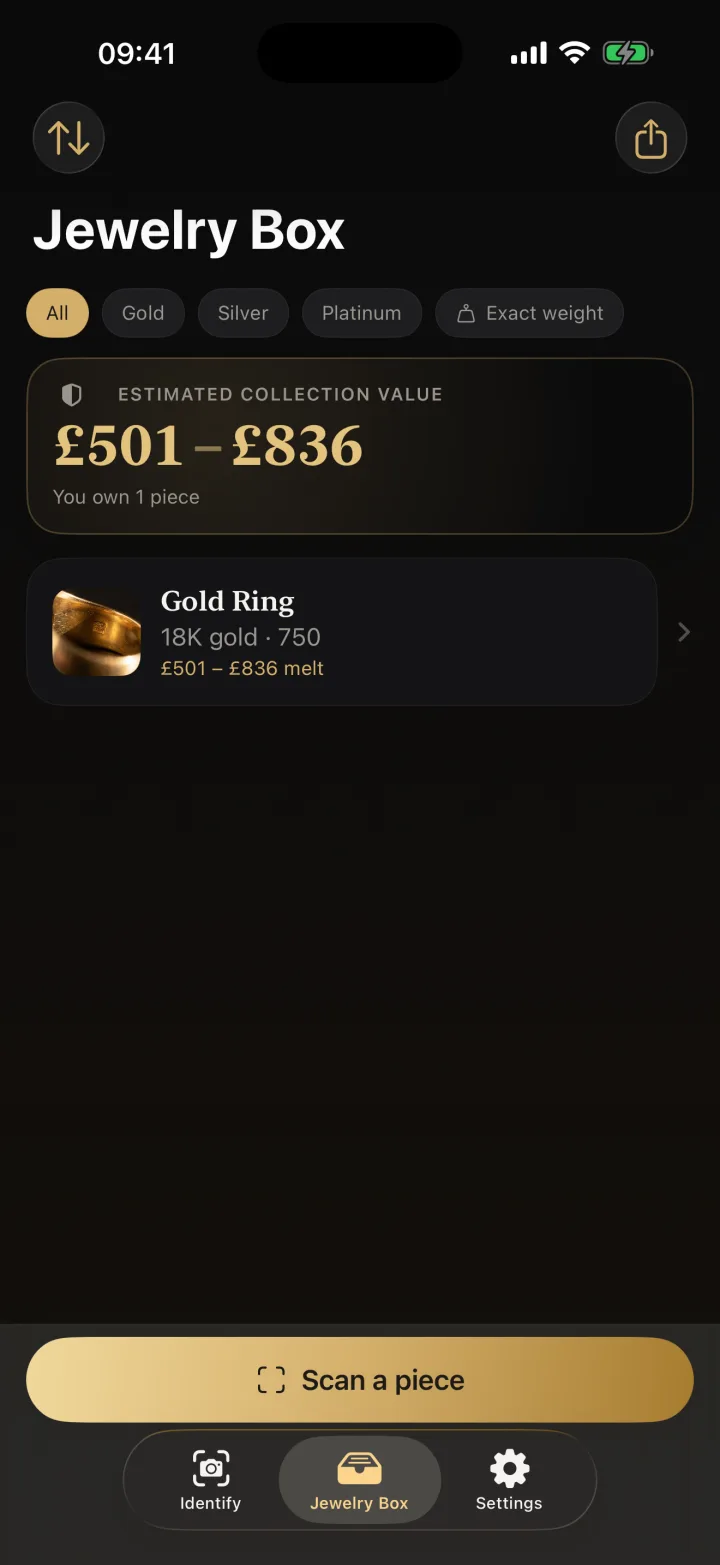
Tap Save on a result and the piece joins your jewellery box — rings, necklaces, bracelets, the earrings you'd forgotten about. Filter by metal, and see what the collection comes to at today's prices.
When the insurer wants a record, export the box as a dated PDF: every piece with its metal, purity and value range, and the total at the bottom. Nothing is saved unless you save it — a scan you don't keep never reaches the total, and the box never leaves your iPhone.
Honest by design
Estimates, not appraisals
Gemmo values the metal, against a live spot price, and tells you the range. It is a confident starting point you can verify — not a certified appraisal, and not an offer.
Spot is the ceiling
A buyer pays under spot — they have to refine the metal and make a margin. Gemmo says so on the price itself, rather than letting you find out at the counter.
Metal, not stones
A photo can't assay metal or certify a diamond, and no app can. Gemmo prices the gold, silver or platinum. Stones, brand and craftsmanship are often worth far more, and that is work for a diamond tester or a gemmologist.
No dark patterns
No countdowns, no fake scarcity, no invented reviews. Three scans free, prices in your own currency, cancel in two taps.
Before you download
The questions people actually ask
How accurate is it?
Two of the three inputs are facts: the purity is read off the hallmark, and the spot price comes from the market. The weight is the estimate, so a photograph alone gets you to roughly ±25%. Weigh the piece on a kitchen scale, type in the grams, and the range closes to about ±5%.
If a result looks wrong, check the purity Gemmo read against the stamp on the piece. A misread mark moves the value far more than a misjudged weight does.
What about the stones?
Gemmo prices the metal. A photograph cannot certify a diamond, and an app that claimed to would be lying to you. Stones, brand, age and craftsmanship are regularly worth many times the gold they sit in — that is work for a diamond tester or a gemmologist, and Gemmo's number is the floor underneath it.
Does my photograph leave the phone?
Yes. The photo goes to Gemmo's own server, which passes it to Google's Gemini API to be read and does not keep it, because that analysis does not run on an iPhone. The only thing sent with it is the app's random install identifier, for the daily scan limit, and Google never sees that. There is no account and no advertising identifier.
Your Jewelry Box — every saved piece, its photo, purity and value — is written to the app's private storage on the device and is never uploaded. The full privacy policy names every processor.
Is it free?
Free to download, with three free scans. A scan only counts when it actually produces a result — a photo that comes back unreadable hasn't cost you one.
After that, unlimited scanning is Gemmo Premium, an auto-renewing subscription billed by Apple. Cancel it in Settings or in your Apple Account, and Apple handles refunds.
Will a jeweller pay me this much?
No — and Gemmo says so on the price itself. Spot is the ceiling, not the offer. A buyer has to refine the metal, carry the price risk until they do, and make a margin, so a real offer sits under melt value, often well under. The point of the number is that you walk in knowing what the metal is worth.
What if the hallmark is worn away?
Then Gemmo says it can't read it, rather than inventing a number. There is a macro mode for the stamp inside a band or on a clasp — move in close and it switches to the ultra-wide lens, the way the system camera does — and if that still fails you can type in the characters you can see. A mark you read with your own eyes is decoded by exactly the same logic as one the camera reads.
Find out what's in the drawer
Inherited pieces, antique and charity-shop finds, or a box you've never gone through. Three scans free, no account needed.
Download on the App Store